
When "Professional" Systems Threaten What's Working: The Hidden Cost of Premature Systematization
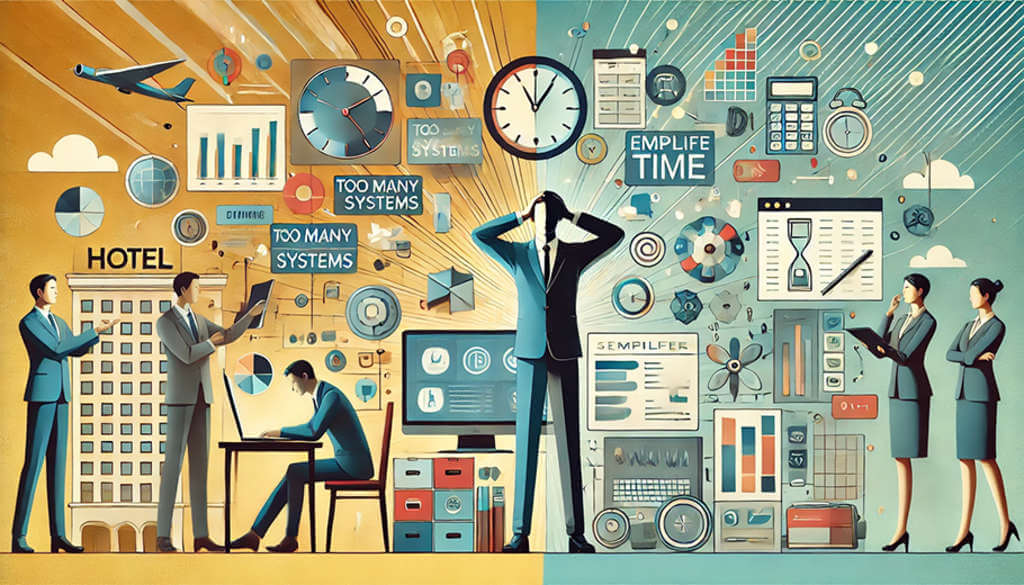
You've seen it happen. A small business is humming along—projects shipping, clients happy, revenue growing. Then someone in the room says it: "We need better systems."
What follows is predictable. Project management software gets purchased. Processes get documented. Approval workflows appear. Meetings multiply to discuss the meetings. And slowly, imperceptibly at first, the thing that was working starts to break.
The person who pushed for systematization genuinely believes they've identified a problem. Things feel chaotic to them. Information lives in people's heads instead of in databases. Decisions happen in hallway conversations instead of documented workflows. To their eyes, this looks broken. But here's what they're missing: it wasn't broken. It was just different from how they would organize it.
This is the hidden tax of premature systematization—when small businesses adopt rigid structures not because they serve the work, but because they serve someone's comfort level with ambiguity.
The Ambiguity Intolerance Problem
Some people have a remarkably low tolerance for ambiguity. They need clear lanes, documented processes, everything spelled out and categorized. There's nothing inherently wrong with this personality type—in the right context, these people build reliable, scalable operations. But when someone like this enters an environment optimized for flexibility and adaptive judgment, they experience functioning systems as chaos.
The problem is one of perception, not reality. When they say "I don't know how things work around here," they're identifying a personal learning curve, not an organizational failure. But it rarely feels that way to them. Instead, it feels like arriving at a house where nothing is labeled and all the light switches are in weird places. The house works fine for the people who live there, but the new arrival experiences it as fundamentally wrong.
This is where the trouble starts. Because "I'm uncomfortable with how informal this is" doesn't sound like a compelling argument for organizational change. But "we have no systems" does. So the discomfort gets reframed as dysfunction, and suddenly you're in meetings about process improvement to solve a problem that didn't exist.
The cognitive load argument often comes up here. "People shouldn't have to keep all this information in their heads," the systematizer argues. "What if someone gets hit by a bus?" It's a reasonable concern—sometimes. But just as often, it's projection. The person making this argument is the one feeling cognitive overload because they haven't yet learned the institutional rhythms. The people who've been there for two years aren't stressed by the informality; they've internalized the patterns. They know who to ask, when to escalate, how decisions actually get made.
Forcing documentation of tacit knowledge doesn't always reduce cognitive load. Sometimes it just transfers the burden from remembering to maintaining—updating wikis nobody reads, filling out templates that add no value, sitting in meetings to ensure everyone's "aligned" on things that were never actually misaligned.
What Gets Lost in Translation
There's a particular kind of organizational knowledge that can't be easily systematized. It's the knowledge of when to break the usual pattern, who can make a quick call without approval, which clients need extra hand-holding, how to read the room in a negotiation. This is the accumulated wisdom of people who've been doing the work, paying attention, and adapting.
When you impose rigid workflows onto this kind of environment, you don't just add structure. You actively destroy value.
Consider a small design agency where the creative director has an intuitive sense of which designers to assign to which projects. She knows that Marcus works better with ambiguous creative briefs while Jennifer needs more direction. She knows that the fintech client needs someone detail-oriented while the startup wants bold experimentation. This isn't documented anywhere. It's judgment built from observation.
Now imagine requiring that all project assignments go through a formal request system with documented justification for each choice. Suddenly, the creative director is spending hours explaining decisions that she could previously make in seconds. The system has created work without creating value. Worse, it's optimized for defensibility rather than outcomes—now she's assigning people based on what she can justify in writing, not on what her experience tells her will produce the best work.
This is what premature systematization does: it replaces adaptive judgment with prescribed workflows, and in the process, it guts the competitive advantage of being small.
Small teams can move fast precisely because they don't need three approval layers and a paper trail. They can pivot because they're not locked into documented procedures. They can experiment because failure doesn't require updating the playbook. When you take that away in the name of "professionalization," you're not fixing a problem. You're importing someone else's problems.
There's also a profound lack of respect embedded in this dynamic. The existing approach—however informal—emerged for reasons. People figured out what worked through iteration and adjustment. There's intelligence in those informal systems, even if it's not codified. When someone arrives and essentially declares "this is all wrong because it doesn't match my mental model of how organizations should work," they're dismissing all that accumulated wisdom. They're saying their comfort matters more than what's actually been proven to work.
Organizational Cosplay
Walk into enough small businesses and you'll see it: companies with fifteen people adopting the organizational structures of companies with fifteen hundred. They've got elaborate approval hierarchies, formal performance review cycles, executive steering committees for decisions that could be made over lunch.
This is organizational cosplay—dressing up like a big company without understanding why big companies look the way they do.
Large organizations develop rigid systems for actual reasons. When you have thousands of employees, you need standardization or nothing would be coordinated. When you're publicly traded, you need documented controls for regulatory compliance. When you're managing complex risk across multiple geographies, you need formal oversight.
But a twelve-person software company doesn't have those constraints. They have different advantages: speed, flexibility, direct communication, shared context. Systematizing away those advantages in order to look "professional" is strategic malpractice.
Yet it happens constantly, driven by a particular mindset about what legitimate businesses are supposed to look like. There's an aspiration embedded in it—we want to be the kind of company that has real systems, formal processes, documented everything. We want to look serious.
The problem is that looking serious and being effective are not the same thing. Sometimes they're directly opposed.
The premature scaling mindset is particularly insidious here. Founders and operators start imagining the company at 10x its current size and implementing systems for that imagined future. "We're building the infrastructure to scale," they say, as they create approval workflows for a team that could make decisions in a single Slack thread.
But you can't skip steps. The systems that work at scale don't work at startup size, and forcing them into place early doesn't prepare you for growth—it prevents it. You bog down in process before you've figured out product-market fit. You optimize for coordination before you have anything worth coordinating.
The Control Problem
Sometimes the push for systematization isn't really about efficiency or scalability at all. It's about control.
When someone insists that every conversation be documented, every decision run through a formal approval process, every hour accounted for in a tracking system—that's not systems thinking. That's surveillance instinct dressed up in productivity language.
This is the dark side of the systematization impulse: the person who feels anxious when they can't see or control what everyone is doing, so they create "accountability systems" that are really monitoring systems. The manager who needs to know exactly what everyone is working on at all times because they don't trust people to manage their own work. The team member who insists on being cc'd on everything because they're uncomfortable being out of the loop.
The tell is when the systems being proposed don't actually make the work better—they just make it more visible to the person proposing them.
There's also the dynamic where one person's workflow preferences become a mandate for everyone. The person who lives in their task management app decides that everyone should work that way. Suddenly designers are spending fifteen minutes a day updating tickets instead of designing. Writers are documenting their creative process in ways that actively interfere with creativity. Salespeople are filling out CRM fields that nobody uses for decisions.
This isn't systems design. It's one person's cognitive style being imposed as policy.
The false equation at work here is: documented equals accountable. But that's not how accountability actually works in high-functioning small teams. Accountability comes from clear ownership, direct communication, and visible outcomes. You don't need to document every step of someone's process to know whether they delivered what they committed to deliver.
When systematization becomes about creating audit trails rather than improving work, it's time to question whose needs are really being served.
Getting It Right: Useful vs. Performative Systems

None of this means that small businesses shouldn't systematize anything. That would be as absurd as the opposite extreme. The question is how to distinguish useful systematization from performative or premature systematization.
Here's a useful distinction: systematize the handoffs and outcomes, not the internal workflows.
When work passes between people or teams, that's where clear agreements matter. The designer needs to know what information the strategist will provide and when. The developer needs to know what "done" means for the feature they're building. These are legitimate coordination points that benefit from clarity.
But how the strategist does their research? That's their business. Whether the developer writes tests before code or after? Let them work how they work best. The systematization should be at the interfaces, not inside people's individual practices.
Before implementing any new system, ask three questions:
What specific problem are we solving? Not "things feel chaotic" but "we missed three client deadlines because the sales team didn't communicate project scope to delivery." Specific, observable problems. If you can't articulate the problem clearly, you don't know if your solution will work.
For whom are we solving it? Is this solving a problem the people doing the work are experiencing, or is it solving a problem for one person who's uncomfortable with how informal things are? If the team that's supposed to benefit from the system thinks it's unnecessary, listen to them.
What are we risking? Every system has a cost. Time spent maintaining it, flexibility lost, creativity constrained. What's the trade-off? Sometimes it's worth it. Often it's not.
The best systems in small businesses are the ones that free people up rather than bog them down. Automating invoicing so the founder can focus on client relationships. Creating a simple checklist for client onboarding so nothing falls through the cracks. Building a shared knowledge base for genuinely repetitive questions.
These systems remove friction. They give people more time and headspace for the work that matters.
Bad systems do the opposite. They add steps that don't improve outcomes. They require documentation that nobody references. They create approval bottlenecks where trust would have sufficed. They optimize for covering your ass rather than getting things done.
The other piece that matters: leaving room for multiple working styles within shared goals. You can agree that everyone will respond to client emails within 24 hours without requiring that everyone check email at the same times or use the same folder system. You can commit to shipping quality work without prescribing the exact process everyone follows to get there.
The goal isn't uniformity. It's alignment on what matters while respecting that different people work differently.
And yes, there are times when systematization is genuinely necessary. When you're hitting real bottlenecks because information only exists in one person's head and they're overwhelmed. When you're making costly mistakes because there's no quality check. When you're struggling to onboard new people because there's truly no documentation of critical processes.
The key is being honest about whether you're in one of those situations or whether you're just uncomfortable with ambiguity.
In Defense of Productive Ambiguity
Small business advantage often lives in the spaces between formal systems. It lives in the ability to make a fast decision without convening a committee. In the freedom to try something unproven without updating the standard operating procedure. In the trust that people will figure it out without being told exactly how.
This isn't chaos. It's a different kind of order—one based on relationships, judgment, and adaptation rather than rules and documentation.
There's courage required to keep what's working even when it looks messy to outside eyes. To resist the pressure to professionalize in ways that would actually make you less effective. To trust that the accumulated wisdom in your team's heads is worth more than a pristine wiki that nobody reads.
Systems should serve the work, not someone's aesthetic preferences or need for control. They should solve actual problems, not theoretical ones. They should free people up, not bog them down.
So the next time someone in your organization says "we need better systems," ask them: better for what, exactly? Better for whom? Better compared to what?
Because the answer to those questions matters more than any project management tool or documented workflow ever will.
The companies that win aren't the ones with the most impressive organizational charts or the most elaborate processes. They're the ones that figure out what actually needs to be systematic and what benefits from staying fluid—and have the confidence to choose differently than everyone else.